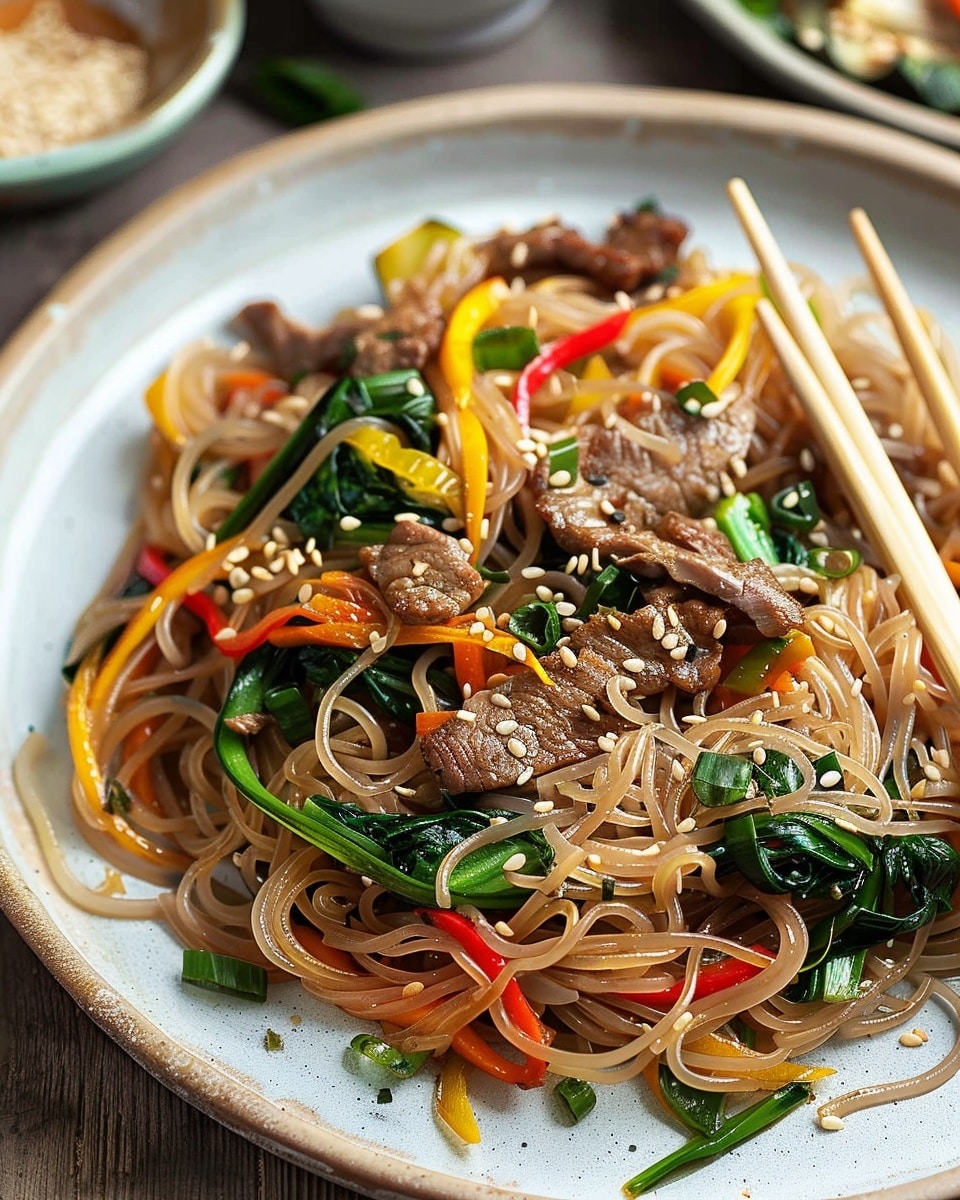
Japchae is a popular Korean noodle dish made with sweet potato glass noodles (dangmyeon), stir-fried with colorful vegetables, marinated beef (optional), and tossed in a slightly sweet and savory sesame-soy sauce. It’s one of my favorite dishes to make when I want something vibrant, healthy, and bursting with umami. Whether served warm or at room temperature, japchae is always a crowd-pleaser.
Why You’ll Love This Recipe
I love japchae because it’s naturally gluten-free, full of texture, and super versatile. The chewy glass noodles soak up the sesame-soy flavors beautifully, and the mix of vegetables makes it feel both light and satisfying. I can enjoy it as a main or side dish, and it’s just as tasty the next day. Plus, it’s easy to customize with or without meat, so everyone can enjoy it.
Ingredients
(Here’s a tip: Check out the full list of ingredients and measurements in the recipe card below.)
For the noodles and sauce:
Sweet potato glass noodles (dangmyeon)
Soy sauce
Sesame oil
Sugar
Garlic (minced)
Black pepper
For the vegetables and protein (optional):
Carrot (julienned)
Bell pepper (red or yellow, thinly sliced)
Spinach (or other leafy greens)
Onion (thinly sliced)
Shiitake mushrooms or other mushrooms
Egg (for garnish – cooked into a thin omelet and sliced)
Beef strips (optional – sirloin or ribeye)
Scallions
Sesame seeds (for garnish)
Directions
I soak or boil the sweet potato noodles according to the package, rinse with cold water, and set them aside.
I whisk together soy sauce, sesame oil, sugar, garlic, and black pepper to make the sauce.
I sauté each vegetable separately in a little oil—carrots, peppers, onions, mushrooms—seasoning lightly with salt, then set them aside.
If I’m using beef, I marinate it briefly in some of the sauce, then stir-fry until just cooked.
I wilt the spinach with a quick sauté or blanch, then squeeze out excess water and cut it into bite-size pieces.
I combine all the cooked ingredients with the noodles in a large bowl or wok and pour the sauce over everything.
I toss well over low heat until everything is evenly coated and heated through.
I garnish with sesame seeds, thin egg strips, and extra scallions before serving.
Servings and timing
This recipe makes about 4 servings as a main or 6 as a side dish. It takes around 20 minutes to prep and 15–20 minutes to cook, so I usually have it ready in about 40 minutes.
Variations
I’ve made vegetarian japchae by skipping the meat and adding tofu or extra mushrooms. I also like adding zucchini or snow peas for even more color and crunch. Sometimes I use tamari instead of soy sauce to keep it gluten-free. If I want a bit of heat, I stir in some Korean gochugaru or chili oil.
Storage/reheating
I store leftovers in an airtight container in the fridge for up to 3 days. To reheat, I warm it gently in a pan with a splash of water or sesame oil. Japchae is also delicious cold or at room temperature, which makes it perfect for packed lunches.
FAQs
What are Korean glass noodles made of?
They’re made from sweet potato starch, which gives them a chewy, springy texture and makes them naturally gluten-free.
Can I make japchae ahead of time?
Yes, it actually tastes better once the flavors meld. I often make it a few hours ahead and serve it at room temperature.
Can I use regular noodles?
Glass noodles are key for traditional japchae, but in a pinch, I’ve used vermicelli or rice noodles. The texture isn’t the same, but the flavors still work.
Is japchae eaten hot or cold?
Both! I like it warm right after cooking, but it’s equally good at room temperature or chilled, especially as leftovers.
How do I keep the noodles from clumping?
I toss the noodles with a little sesame oil after boiling to keep them from sticking, and I mix everything gently when combining.
Conclusion
Japchae is one of those dishes that always impresses without being difficult to make. I love how flexible and flavorful it is—from the chewy noodles to the sesame-scented sauce and crisp veggies. Whether I serve it as a side or a main dish, it’s a beautiful, balanced plate of comfort that I come back to again and again.
Japchae is a vibrant Korean noodle dish made with chewy sweet‑potato glass noodles (dangmyeon), stir‑fried with colorful vegetables, optional marinated beef, and tossed in a slightly sweet‑savory sesame‑soy sauce. It’s healthy, flexible, and bursting with umami flavor.
Author:Lizaa
Prep Time:20 minutes
Cook Time:15–20 minutes
Total Time:about 40 minutes
Yield:4 servings (or 6 as a side dish)
Category:Main or Side Dish
Method:Stir‑fry / Toss
Cuisine:Korean
Ingredients
8 oz (about 225 g) sweet‑potato glass noodles (dangmyeon)
2 Tbsp soy sauce
1 Tbsp sesame oil
1 Tbsp sugar
2 cloves garlic, minced
Black pepper, to taste
For the vegetables & optional protein:
1 carrot, julienned
1 red or yellow bell pepper, thinly sliced
2 cups spinach (or other leafy green)
1 onion, thinly sliced
4 oz mushrooms (shiitake or mixed), sliced
2 large eggs (optional, cooked into thin omelet strips)
8 oz beef strips (sirloin or ribeye), marinated and optional
Scallions, chopped, for garnish
Sesame seeds, toasted, for garnish
Instructions
Cook or soak the glass noodles (dangmyeon) according to package directions. Rinse with cold water and set aside. :contentReference[oaicite:1]{index=1}
Whisk together soy sauce, sesame oil, sugar, garlic, and black pepper to make the sauce.
Sauté each vegetable separately in a little oil—carrot, pepper, onion, mushrooms—seasoning lightly with salt, then set aside. :contentReference[oaicite:2]{index=2}
If using beef, marinate briefly in some of the sauce, then stir‑fry until cooked through.
Wilt the spinach by a quick sauté or blanch, then drain and squeeze out excess water; cut into bite‑sized pieces.
Combine all the cooked vegetables (and beef if using) with the noodles in a large bowl or wok. Pour the sauce over everything. :contentReference[oaicite:3]{index=3}
Toss everything over low heat for a minute or two until well coated and heated through. Garnish with scallions and sesame seeds, and serve hot or at room temperature. :contentReference[oaicite:4]{index=4}
Notes
The glass noodles (dаngmyeon) are naturally gluten‑free and have a unique chewy texture. :contentReference[oaicite:5]{index=5}
Vegetables can vary—zucchini, snow peas, bean sprouts, and wood‑ear mushrooms are common substitutes or additions. :contentReference[oaicite:6]{index=6}
You can omit the beef (or other meat) to make it vegetarian or vegan. The dish is also commonly served at room temperature, making it ideal for lunch boxes or potlucks. :contentReference[oaicite:7]{index=7}
After assembly, taste and adjust seasoning—sometimes the noodles absorb sauce and need a little extra soy sauce, sugar, or sesame oil. :contentReference[oaicite:8]{index=8}